EST. WEST MICHIGANCIRCULAR · TRACEABLE · BORING-ON-PURPOSE

The boring tote yard that quietly saves the planet.

We buy, recondition, redistribute and repurpose intermediate bulk containers so they never become 110 lbs of HDPE in a landfill. 275 and 330 gallon caged composites, food grade, washed, rebottled. No phone tag — just email back, picked up, paid out.

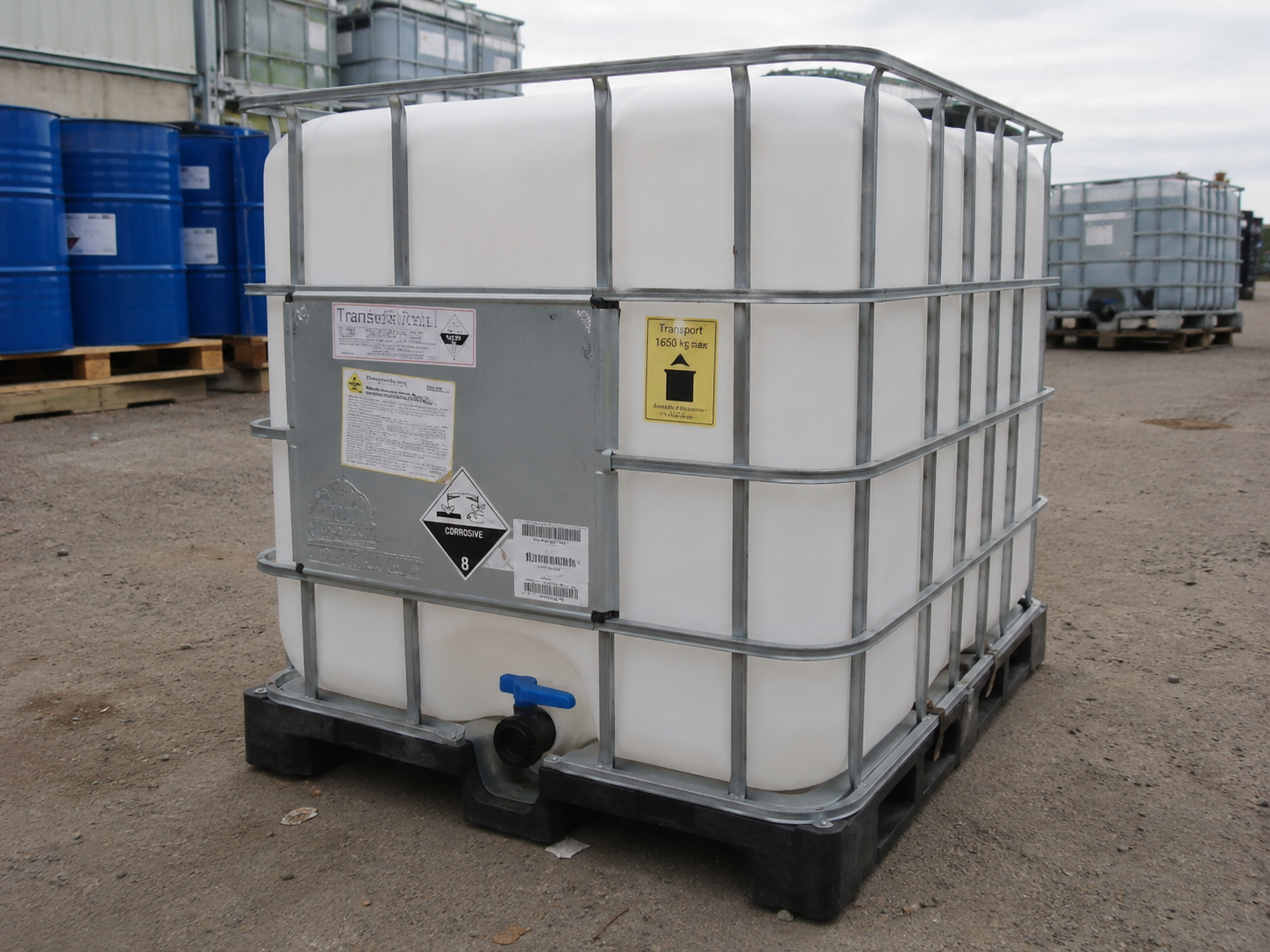
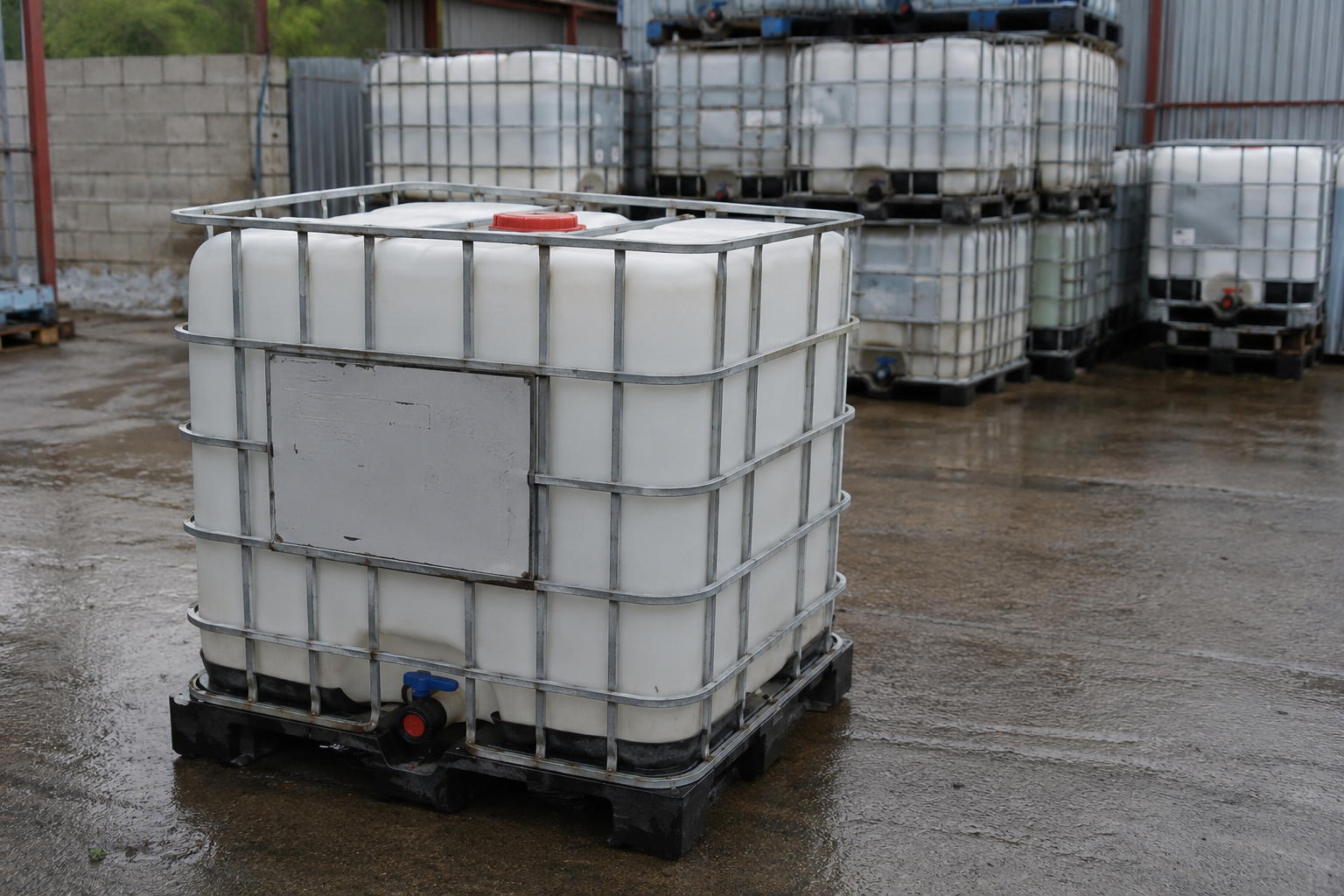
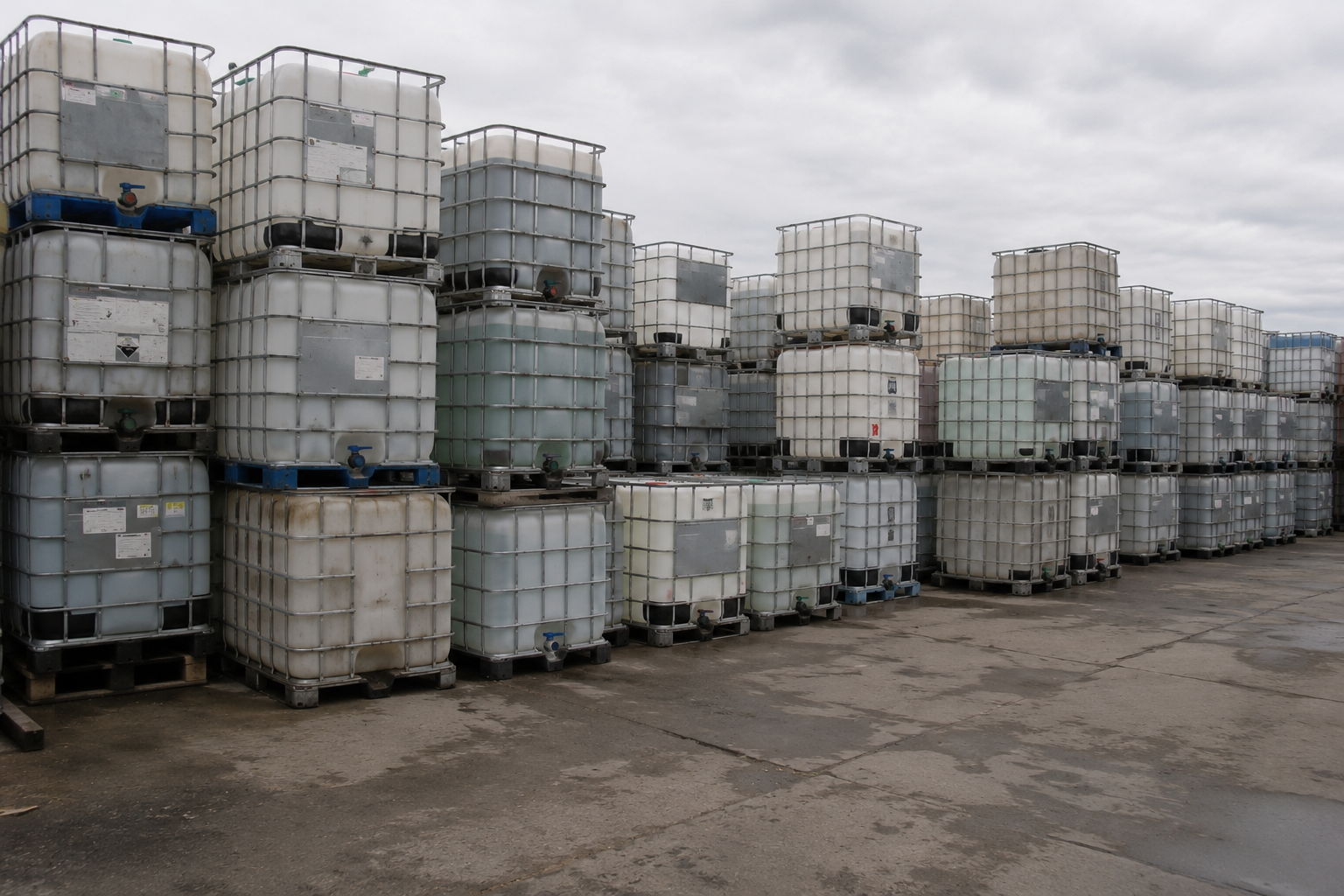
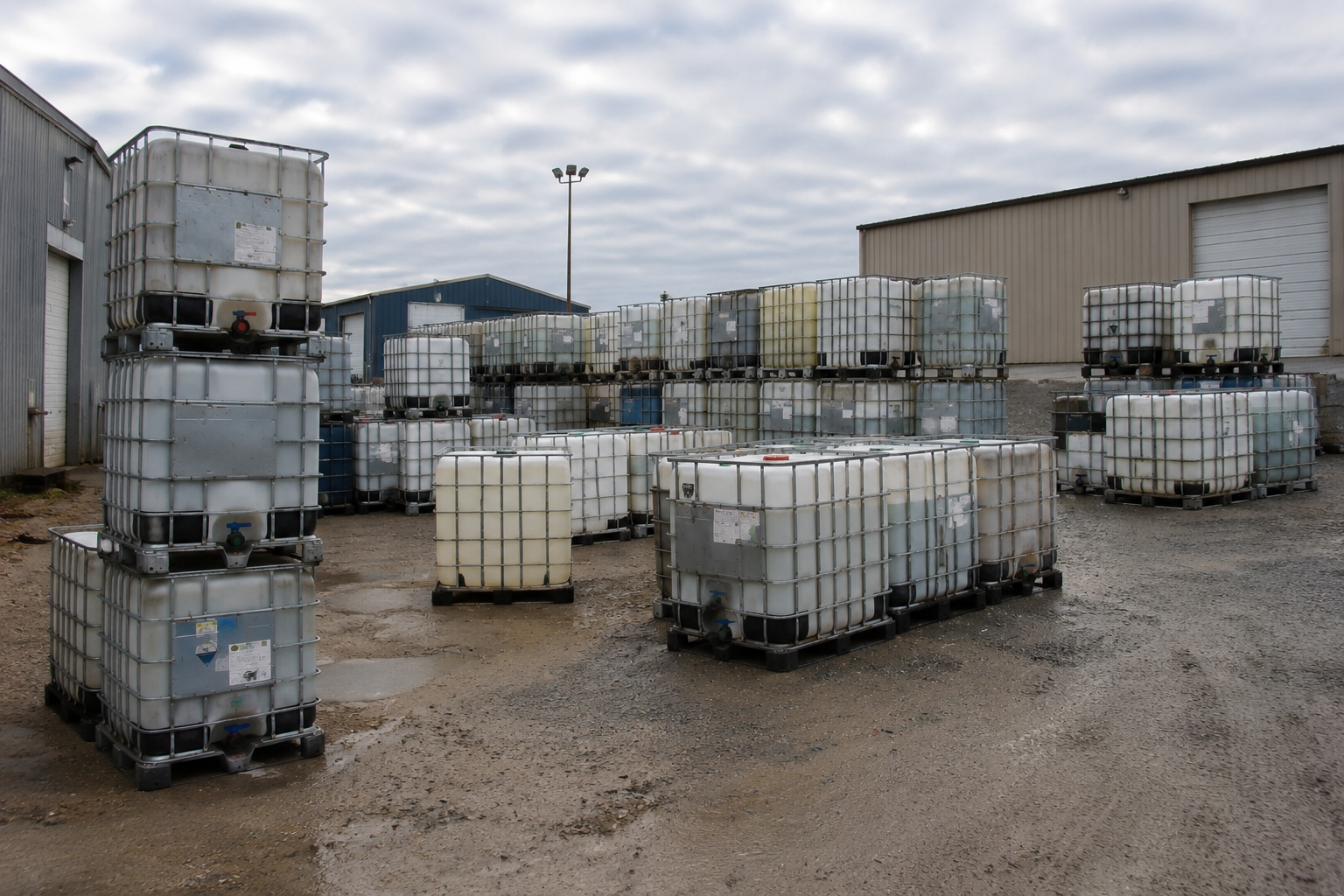
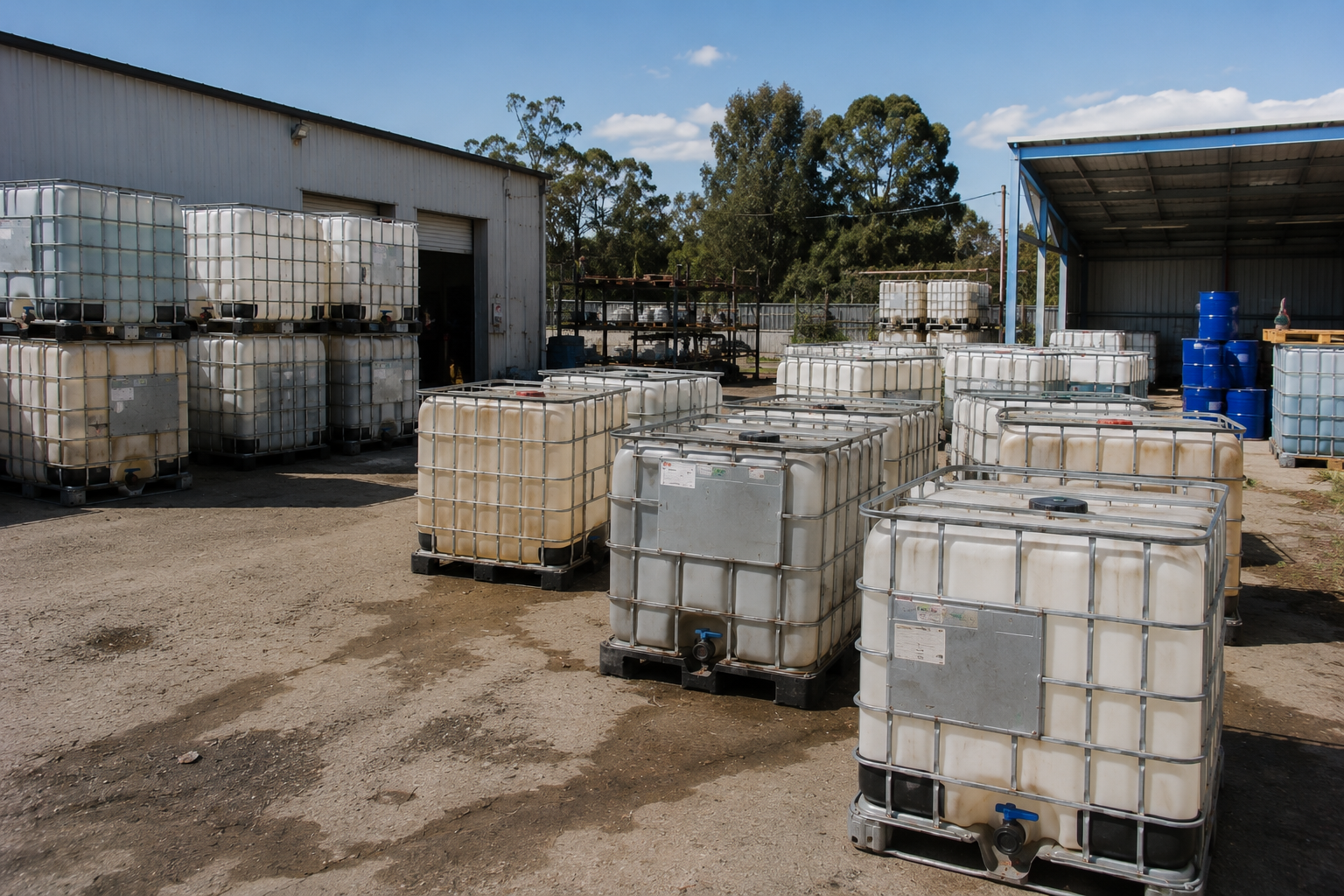
The yard — caged composite IBC totes staged for pickup902 Scribner Ave NW · West Michigan
30-Second Form

Quote me right now.

Tell us what you need or what you have to move. We're a small yard — every email gets a hand-written answer within one business day.

Format: name@example.com
Format: (555) 555-1234 or 555-555-1234 — US or Canada only
Format: 12345 / 12345-6789 (US) or A1A 1A1 (Canada)

What we've kept out of the landfill, live.

Run Your Own Numbers
184,220
Totes diverted from landfill
11,790,080
lbs of CO₂e saved vs. new
16,948,240
gal of process water saved

Counters update as our wash bay processes containers. Methodology in our Sustainability Promise.

Operating playbook

One yard. Four lanes. Zero containers wasted.

Most resellers just flip totes. We close the loop — buy, wash, redistribute, repurpose, and (only at the end) recycle the polymer itself.

01

Source

Truckloads bought from food, chemical, paint and ag clients across the Midwest.

02

Triage

Each tote graded — food, washable, modify-or-repurpose, polymer-only.

03

Recondition

Steam, rinse, bottle-swap, recage. UN/DOT documentation re-applied.

04

Redeploy

Sold or leased back into farms, breweries, soap makers, and chemical lines.

05

Repurpose

What can't be reused becomes rain catchers, raised beds, planters & education kits.

Pick a lane — we run all six.

Why used > new

Every new tote you skip is ~110 lbs of virgin plastic that never needed to be made.

The math on intermediate bulk containers is pretty unforgiving — they're heavy, they're HDPE, and they get used once and then forgotten in a back lot. We exist because that's an insane way to treat 330 gallons of still-perfectly-good container.

78%
Embedded energy avoided vs. virgin HDPE tote
92gal
Wash water per recon vs. ~580gal to manufacture
9–14×
Times a single tote can be redeployed
0
Phone calls required to do business with us
Who we serve

Yard regulars.

A short list — though if you keep a fluid in bulk we've probably moved it.

Cidermakers & vintners

Food-grade washed totes for ferment & storage.

Soap & cosmetics

HDPE-compatible, rebottled & sealed.

Maple sugar makers

Food grade, sanitized, returnable.

Concrete admixtures

Industrial as-is, valve-tight.

Farms & ranches

Water haulers, fertilizer mix, sap & feed.

Breweries & distillers

Wash trim, glycol, brite-tank pre-rinse.

Municipal facilities

Rain catchment, salt brine, road dust.

Education & makers

Repurposed totes for hydroponics & art.

From the yard

What it actually looks like out here.

Real photos — totes staged, washed, repaired, and rolled back out. No stock, no renders.

YardStaged caged composite IBC totesStaging row — Grade B inventory.
Wash bayTwo-stage wash bayTwo-stage caustic + rinse.
TriageCage triageRe-pair: cage to bottle.
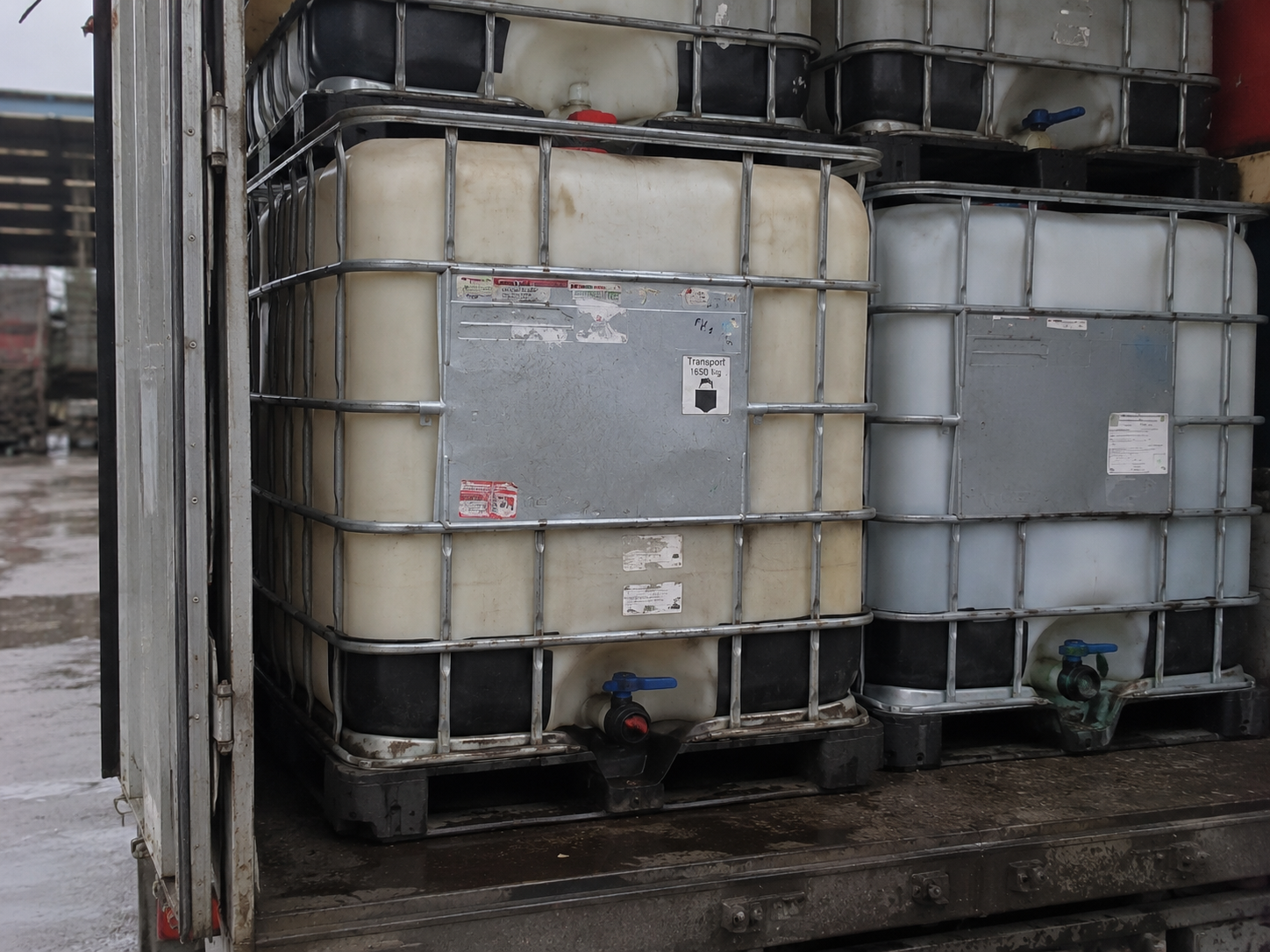
ReconReconditioned toteSteam-washed, recertified.
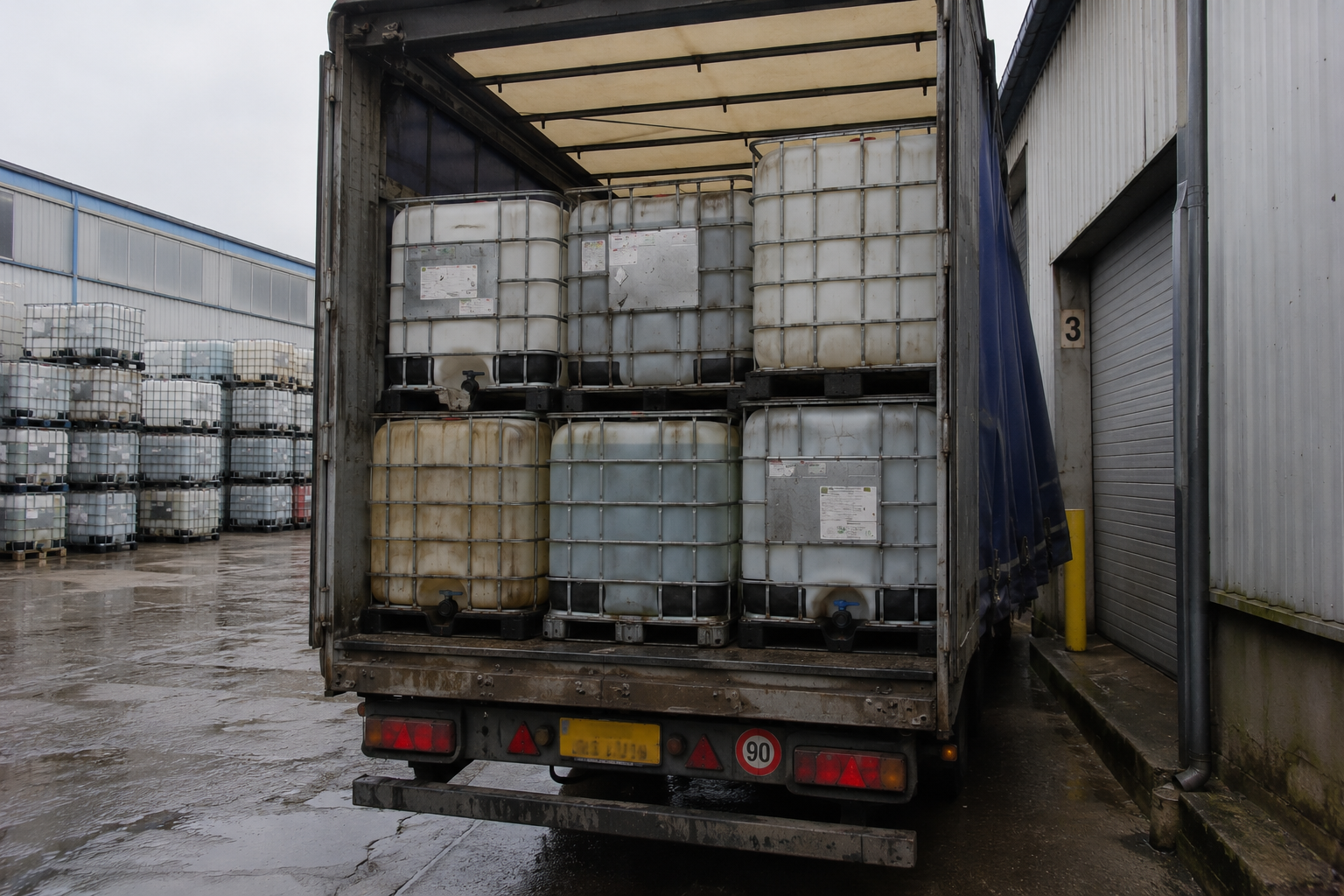
LoadoutFlatbed loadoutFlatbed Cleveland → Chicago.
RepurposeRepurposed tote — rain catchmentRepurposed for rainwater & raised beds.

“They picked up 38 empty totes from our brewery, wrote me a check on the spot, and sent a photo two weeks later of the same totes washed and resold to a maple farm. That's the whole pitch.”

— Cellarmaster · Grand Rapids brewery (June 2026)
Field Notes

What to read before you buy.

We write the stuff we wish was online when we started moving totes.

One last thing

We'd rather your tote live nine lives than make it to a barge.

What you should know

The long-form file.

We're a small yard in West Michigan that buys, washes, refurbishes, and redeploys intermediate bulk containers. Below is the part of the website that exists because we got tired of answering the same emails. It's denser than a marketing page — but if you're going to buy or sell totes, this is the stuff that matters.

14,000+
Totes refurbished & redeployed since 2022
9–14×
Average deployment cycles per bottle
~62 kg
CO₂-equivalent saved per reused vs. virgin tote
0
Phone calls required to do business with us
1 day
Email response SLA — usually under 4 hours
150 mi
Free-pickup radius for fleets of 12+
Process

How it actually works.

01

Source

Truckloads bought from food, chemical, paint and ag clients across the Midwest, with documented previous-contents on every bottle.

02

Triage

Each tote graded across four lanes — Grade A (food), Grade B (washable industrial), Grade C (modify-or-repurpose), or polymer-only for end-of-life recycling.

03

Wash

Two-bay setup: caustic + potable rinse for industrial, four-stage food-grade protocol with pH-tested discharge for Grade A units.

04

Refurbish

Cage triage, valve packing replacement, gasket renewal, optional UN/DOT re-marking with paperwork, repalleting where required by audit.

05

Redeploy

Sold or leased back into farms, breweries, soap makers, chemical lines, municipal facilities, and education makers across the eastern Great Lakes.

06

Recycle (last resort)

Bottles that genuinely can't be saved are ground, washed and pelletized into HDPE feedstock for irrigation pipe, drainage tile, plastic lumber, and recycled extrusions.

Deep dive

The detail behind the surface.

§ 01

Why we exist (the short version)

A 275-gallon composite IBC weighs roughly 135 lbs empty. The HDPE bottle takes about 52 kg of CO₂-equivalent emissions to manufacture and ~580 gallons of fresh water at the polymer plant. The cage adds 18 kg of CO₂-eq and another quarter ton of embodied steel. After one or two trips of paint or syrup, most of those totes get pushed to the back of a yard and forgotten — and most eventually get either landfilled or shredded for plastic lumber when they could have been refilled nine more times.

We exist because that math is broken. Every used tote we put back into service is roughly 47 kg of CO₂-equivalent that didn't have to be emitted, ~500 gallons of fresh water that didn't have to be drawn, and one piece of HDPE that didn't have to be made. Stacked across the 2,000+ bottles we move every quarter, the numbers are not trivial.

None of this is charity. The unit economics work because reconditioning a used bottle is cheaper than manufacturing a new one — by about 4×. Our customers pay below new-tote prices, the world saves the carbon, and the yard runs in the black. The hard part is logistics: building the relationships that let us source good empties at fair prices, and the wash bay that turns them around in volume.

§ 02

How we make money (transparency)

Three revenue lines. The biggest is direct resale of reconditioned bottles to end users — small manufacturers, growers, breweries, soap makers, ag co-ops. The second is wash-only service: customers ship us their own fleet, we run them through the bay and ship them back. The third, smaller but growing, is repurposing — cut-down totes for rain catchment, aquaponics, planters, education kits.

Margins on used resale are roughly 35–45% before yard overhead. Wash service is closer to 20% because we're not buying or carrying the bottle. Repurposed goods are highest-margin per unit but lowest in volume; we sell maybe 80–120 of those a year, mostly to weekend customers driving up to the yard on Saturdays.

What we don't do: we don't markup freight, we don't add restocking fees, we don't charge "documentation" fees, and we don't bundle. Pricing is on the website. Quote responses are tomorrow by lunch.

§ 03

The reading list — start here

If you're new to bulk container procurement, three resources to read in this order:

1. Tote Grades Explained — Rinsed vs. washed vs. food grade vs. recon, with the actual wash protocols behind each label.

2. IBC Size Guide — 275 vs. 330, footprints, weights, pallet types, fill rates, freight class. Tables for every common variant.

3. Materials & Chemical Compatibility — What HDPE tolerates, what it doesn't, when to step up to stainless, full compatibility table at the bottom.

Once those are read, the rest of the site fills in detail by application. Field Notes (the blog) has 36 long-form pieces ranging from valve identification to honey-decrystallization protocols.

FAQ

Quick answers.

01Do you take phone calls?

No. Email gets answered faster — info@ibctankscleveland.com, reply within one business day, usually under four hours.

02Where are you exactly?

902 Scribner Ave NW, Grand Rapids, MI 49504. Yard hours Mon–Fri 8 a.m.–4 p.m., Saturdays 9 a.m.–1 p.m. May through October.

03Smallest order?

One tote. We'd rather you take one and come back than commit to twelve and find we're not your supplier.

04Largest order you've shipped?

318 bottles in one flatbed move, brewery wind-down sale, July 2025. We can scale into truckloads with a week's notice.

05Do you finance?

Net 15 / net 30 terms available after three orders. No third-party financing partner — we'll just invoice you.

Related

Keep reading.